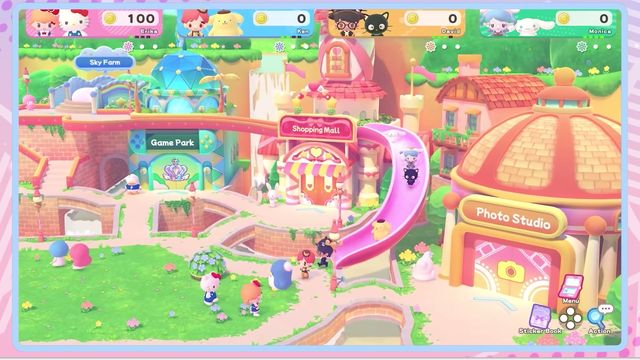
Board Game Tips and Turn Order
Spin the roulette, resolve the space, deliver if you can; a day ends when everyone has taken a turn. A Petit Game unfinished by your next turn skips that turn. The final mini-game pays a Last Game Bonus.
All three boards run on the same turn loop, and the loop is where runs are won or lost. Nothing here is a trick; it is the manual's own structure, spelled out in the order you meet it.
The turn loop
- Spin the roulette. Press to stop it, then move exactly the number you rolled. Spaces you land on and pass can trigger effects.
- Resolve the space. Shop, Minigame, Challenge, Item or a board-exclusive space.
- Deliver if you can. Walk to a delivery space and pick Give or Charge.
- End the day when every player has taken a turn.
If the path splits, choose the branch with the stick and confirm. The map (left button) shows the layout and which space you are standing on, with mini-game spaces marked by an icon and the delivery space by a triangle.
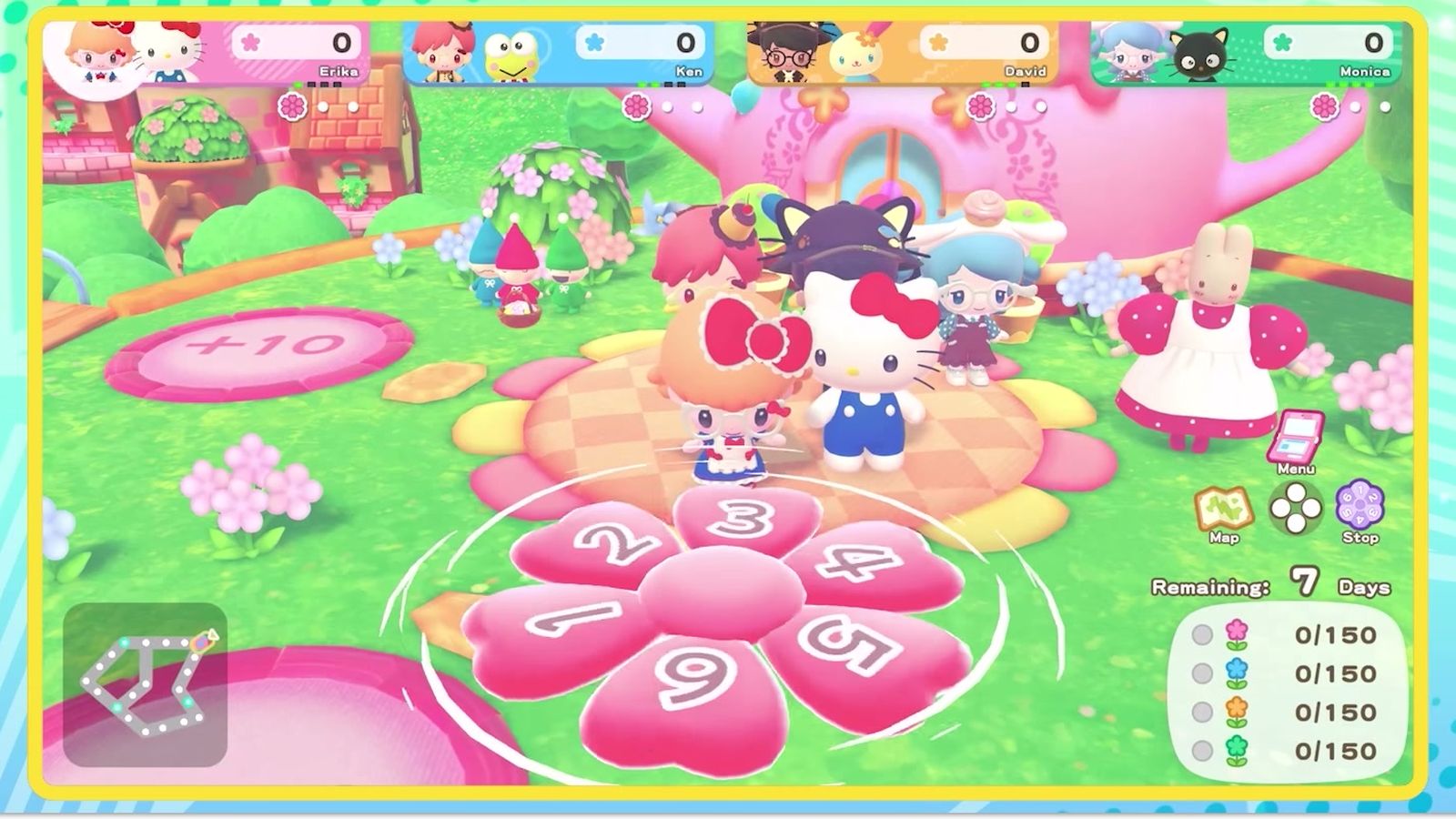
Mini-game time
Landing on a Minigame space pulls everyone in. Play well and the reward converts into flowers, droplets or sparks. Because every mini-game is cooperative, "playing well" means the group clearing it — a solo hero does not carry a four-player room.
Petit Games: the turn-skip trap
Petit Games are solo games played on the Game Pad at the top of the screen. Other players keep playing while yours runs. If the Petit Game is still going when your next turn arrives, that turn is skipped. Two consequences:
- Do not start a long Petit Game on the last turn of a day if you are unsure you can finish it.
- Petit Games are the main income on Shop spaces, so the skill is knowing which ones you can clear quickly.
Items, and using them on someone else's turn
The Game Pad (top button) lists your items; select one and press confirm to use it. Some items can be used during another player's turn to help them. That is the cooperative layer of the board: a well-timed item on a friend's mini-game is worth more than an item saved for yourself.
Delivery and the quota
Delivery spaces are where flowers, droplets and sparks convert into progress. Select Give or Charge and the counter moves. The delivery quota and the day limit both change with difficulty — the manual's examples are all Medium:
| Board | Delivery points | Quota per point (Medium) |
|---|---|---|
| Blooming Flower Festival | 1 | 150 flowers each |
| Tropical Twilight | 4 | 150 droplets each |
| Sparkling Neon Night | 3 | 200 sparks each |
Deliveries are counted per point, so on the multi-point boards a full load at one place does not fill another.
The two endings, and the bonus
- Quota met: the game ends, the ending sequence plays, then the results screen pays coins by performance.
- Days exhausted: the game ends anyway and still pays coins, based on results.
In both cases, doing well on the final mini-game earns a Last Game Bonus. If a run is already lost on quota, the last mini-game is still worth playing properly — it is the one payout you can still move.
Practical habits
- Pass-through spaces count. A space you pass can trigger, so a big roll is not wasted if it skips the space you wanted.
- Keep a delivery run in mind. Hoarding looks efficient and usually is not; the walk home is part of the cost.
- Read the rules card. Every mini-game shows one before it starts, and several games are unclear until you read the verb.
- Re-pick difficulty between runs. It is free and it is the only balance lever you have.
Board-specific routes: Blooming Flower Festival for the single delivery point, Tropical Twilight for the mountain, Sparkling Neon Night for the fee and the free spin.